A Great Barrier Reef vacation will almost always include Great Barrier Reef Snorkelling, Great Barrier reef diving, or at least wading around in shallow water, or walking on coral cays.
You need to be aware that The Great Barrier Reef has several very dangerous marine animals, so you need to be on your guard all the time you are walking on coral, in shallow water, snorkelling or diving.
The most common dangerous animals of the Great Barrier Reef includes jellyfish, several species of fish, sea snakes, octopus, and even certain shellfish that can potentially be fatal to humans.
In fairness if you take the right precautions, and you know what to look out for, you can reduce the danger, and still enjoy the wonders of the Great Barrier Reef on your Great Barrier Reef trip.
The list of dangerous marine animals plus a brief description follows.
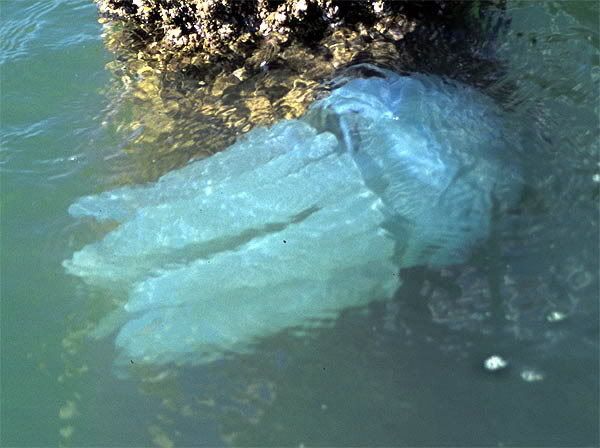
Box Jelly Fish.  This is one of the most dangerous creatures on the reef, and can be found swimming close to the shore from November through to March.
It gets its name from the shape of its body, which is a box shaped bell with clusters of tentacles extending from each corner, which can reach up to 3 metres in length. They are nearly invisible because they are so transparent, and the strongest advice is if you want to swim off a beach in the summer months, then swim inside the netted areas.
Their sting is agonising, however a single sting is bearable, but the problems tend to arise from panic, causing entanglement with the tentacles and a lot more stings. Enough venom can kill an adult, or drowning due to the panic. If the tentacles are stuck on a victim then they can be neutralised by pouring vinegar on them. Irukandji Jellyfish
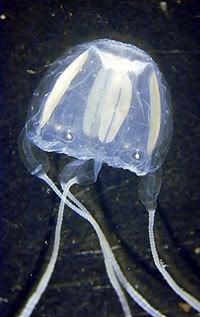
The Irukandji (Carukua barnesi) inhabits Northen Australian waters. This is a deadly jellyfish, which is only 2.5 cenimetres in diameter, which makes it very hard to spot in the water. It is to be found at the northern end of The Great Barrier Reef. They tend to be found in the deeper waters of the reef, but can be swept inshore. Divers and snorkelers are most at risk, and they usually appear in the summer months November to March.

The sting goes unnoticed for possibly as long as half an hour, but then the venom begins to take hold, and it can be strong enough to hospitalise adults. Although it’s small it’s very dangerous, because you won’t see it unless you are specifically looking.
This is a species of jellyfish which has become known about in recent years, due to deaths of swimmers in Australia. In 2002, Richard Jordon was stung whilst swimming off the coast of Hamilton Island. He was a 58 year old British tourist, unfortunately he died a few days later.
Amazing Fact: The Irukandji jellyfish is only 2.5 centimetres in diameter, but can cause death to humans within days.
Blue Ringed Octopus
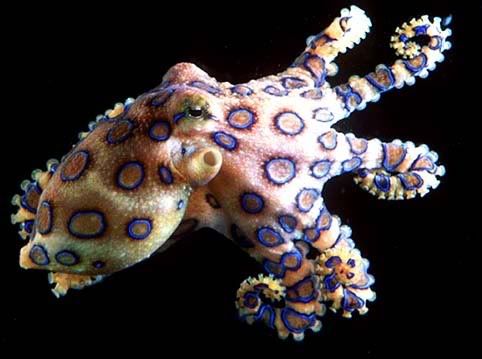
 It is the only dangerous octopus in the world, and is the size of a golf ball also can be as small as a quarter up to 6 inches in diameter, and looks cute. The Blue Ringed Octopus has a beak that can penetrate a wet suit and poison that can kill an adult in minutes, and there is no known antidote.
It lives in rock pools and coral in the Pacific from Japan to Australia, and is very dangerous when the blue rings glow an electric blue, when it feels threatened. It is spectacular when this happens, and it attracts children, so they need to be warned not to touch anything!!
The bite doesn’t hurt, and will happen if you pick it up. Within a few minutes the venom will give breathing difficulties and nausea, muscle spasms, occasionally vomiting and worse still if it triggers an allergic reaction. If treatment is not sought fast enough, the victim may eventually die of paralysis.
Cone Shells
Cone shells look very pretty but this shellfish is one of the most dangerous animals on the Great Barrier Reef.
The problem is that there are many different types of Cone Shells all over the Reef, some harmless, and some so deadly they can kill a human, as they have the most potent neurotoxins known about, in their venom.
If you add to this they have attractive shells then holidaymakers pick them up, and if threatened the Cone Shell will fire a harpoon like dart into the victim. You will know if this happens or if you stand on one when walking, because the sting will be felt straight away.
Lion Fish
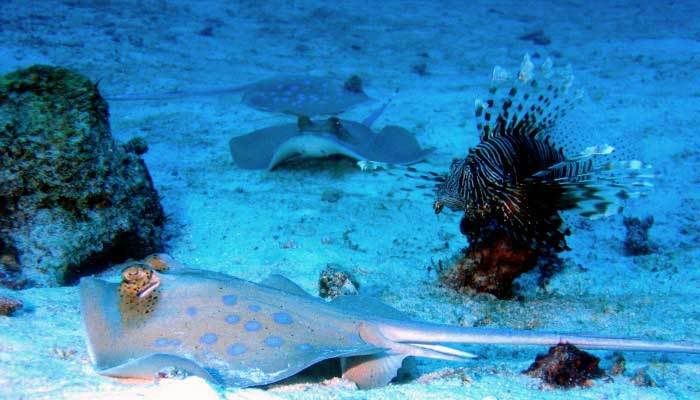
Lion-fish are members of the Scorpion Fish family and are found all over the Great Barrier Reef. They are difficult to see, and much sought after, but they hide up in crevices and small caves. The fact that they like shallow water makes them a threat to swimmers, because they have venomous and extremely large fin spines that can penetrate the skin, giving immediate pain resulting in muscle swelling, cramps, nausea, fainting and even death.
They can be recognised because they have stripes similar to a zebra
Stone Fish
 The Stonefish is another of Australia's deadly marine creatures. They inhabit shallow waters along the coast. Stonefish are ugly looking creatures, mottled green - brown in colour, with 13 dorsal spines that release a poisonous toxin when pressed, so stepping on one is a very painful experience. The pain can be excruciating and death is a possibility..
They are found mainly in the warmer northern half of the Great Barrier Reef, and they live on top of rocks or the seabed, where they lie motionless, and their camouflage colours make them almost impossible to see. They are therefore a danger at low tide when walking along the beach, so footwear with thick soles is important. The severity of the pain and the symptoms will depend on the depth of penetration of the poisonous spine. Amazing Animal Fact: The venom of a stonefish can kill a human in two hours. The stonefish feeds on other small fish or shrimp.
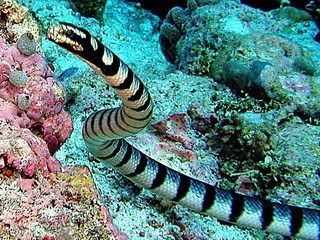
Finally there are 15 species of sea snakes on the Great Barrier Reef, and all of them produce lethal venom. The good news is they have small fangs and aren’t aggressive, and no-one has died from a bite.

Stingrays can be very unpleasant if you stand on their tail, as they whip up and can cut you very badly. You must ensure your anti tetanus is up to date before leaving home.
All this makes depressing reading, but remember tens of thousands of people take a Great Barrier Reef vacation every year, and only a very few are unlucky, so be sensible, take precautions.